
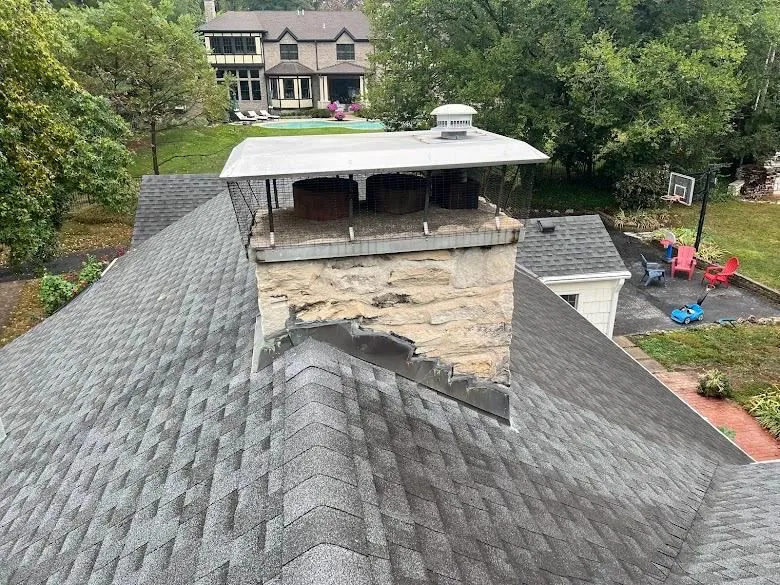
Chimney Flashing Repair
Resealing the flashing where the chimney meets the roof.
Learn moreWhen flashing is corroded, badly installed or beyond resealing, replacement installs new metal at the chimney-to-roof joint. Done right, with proper counter-flashing set into the masonry, it seals the joint for the long term.
When flashing is corroded, badly installed or beyond resealing, replacement installs new metal at the chimney-to-roof joint. Done right, with proper counter-flashing set into the masonry, it seals the joint for the long term.
There's only so long you can keep resealing failing flashing. When the metal itself has corroded or was never installed correctly, new flashing is what actually stops the leak — instead of chasing it with more caulk every year.
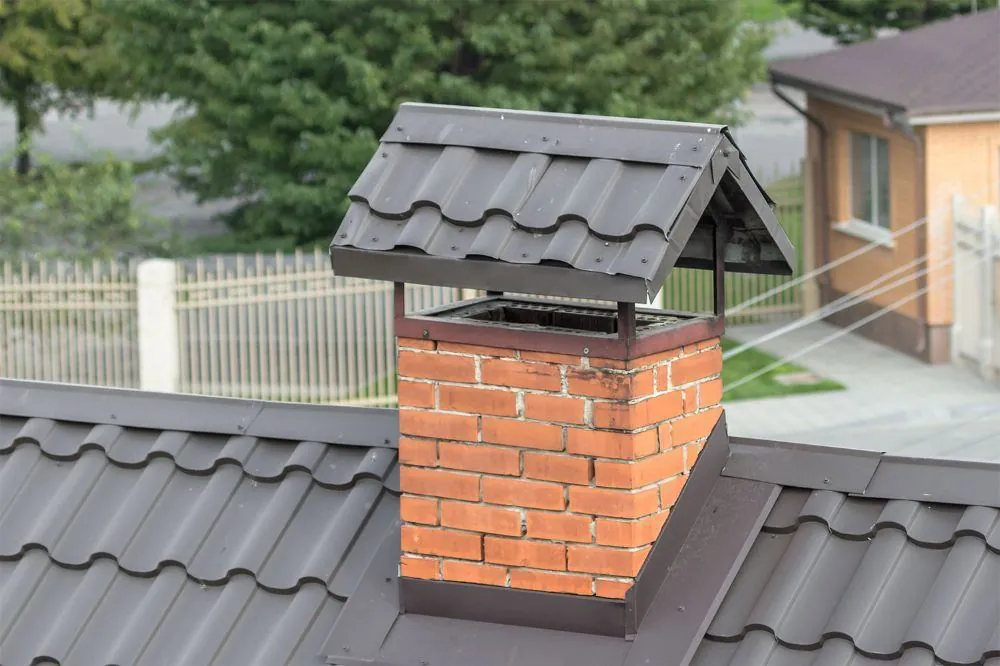
We take out the failed flashing and clear the joint.
We fit new flashing integrated with the roofing.
We cut counter-flashing into the masonry so water can't get behind it.
We seal the assembly and confirm a watertight joint.
Proper counter-flashing let into the mortar joints is what makes flashing last through Pittsburgh winters — surface-caulked flashing simply doesn't hold up to repeated freeze-thaw. When we replace flashing we do it to last, not to be back next year.
Sealing works while the metal is sound. Once the flashing has corroded or was installed wrong to begin with, no amount of caulk fixes it — the metal has to be replaced and properly integrated with the roof and masonry.
Flashing sits at the intersection of the chimney and the roof, so we handle the chimney-side flashing correctly and can advise if broader roofing work is involved.
Resealing the flashing where the chimney meets the roof.
Learn moreFinding and stopping the source of a leaking chimney.
Learn more
Casting a new crown when the old one has failed.
Learn moreBreathable sealant that keeps water out of the masonry.
Learn moreRebuilding the damaged section above the roofline.
Learn moreTalk to a Pittsburgh-area chimney and fireplace pro today.
412-459-7788